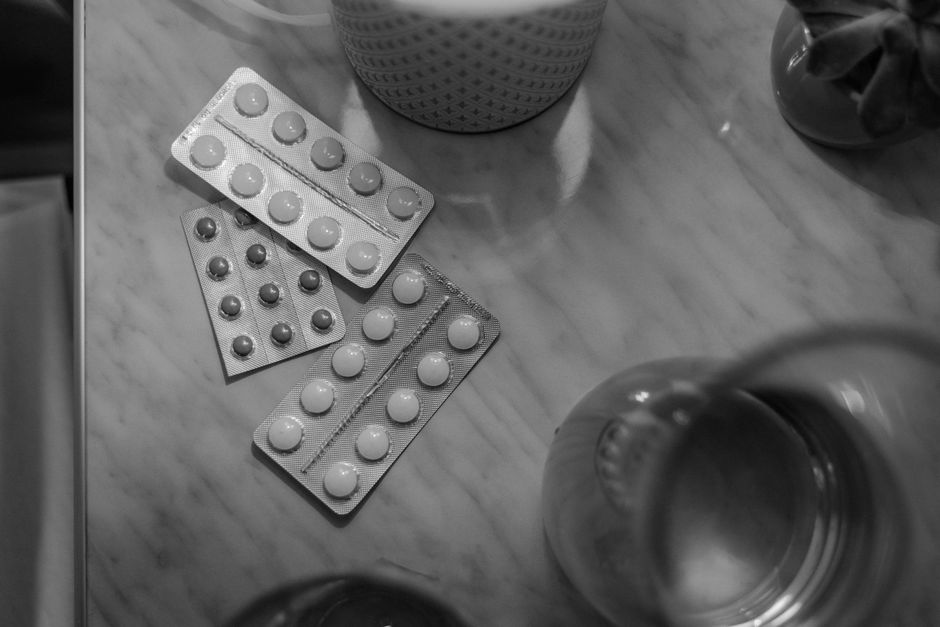
It happens to almost everyone
You reach for your medicine and realise you forgot yesterday’s dose. Or you find an extra tablet still in the blister pack when there should not be one. That sinking feeling is very common — studies suggest most people who take regular medicines miss a dose at some point. The good news is that there is a clear, sensible way to handle it, and you do not have to guess.
This guide walks you through the general rules, explains which medicines need extra care, and helps you know when to call a pharmacist rather than deciding on your own.
The one rule that almost never changes
Never take two doses at once to make up for a missed one. This is the single most important point from both the NHS and the US Food and Drug Administration (FDA). It sounds simple, but doubling up is the most common — and potentially dangerous — mistake people make after a missed dose. For many medicines, taking twice the amount at once puts far more of the drug into your body than it is designed to handle.
Whatever else you decide to do, hold to this rule. Skip the missed dose if you are unsure, take your next dose at the normal time, and speak to a pharmacist if you need guidance. That is always safer than doubling up.
The general approach for most medicines
For most medicines, the advice is to take the missed dose as soon as you remember — but only if your next dose is not due very soon. A useful way to think about it: if it is almost time for your next dose, skip the missed one and carry on as normal. If you are well within the gap between doses, go ahead and take it.
The NHS Specialist Pharmacy Service offers a practical guide for common situations. For most medicines, taking a dose up to two hours late is generally fine. For medicines taken twice a day, a missed dose can usually be taken if it is within six hours of when it was due. If more than six hours have passed, skip it and take the next dose at the usual time. These are general principles — your own medicine may have different rules, so always check the leaflet that came with it.
Check the patient information leaflet — but know its limits
The patient information leaflet (PIL) — the folded paper inside your medicine box — often has a section called “How to take” or “If you forget to take.” This is the best place to start, because rules genuinely vary from medicine to medicine. Some medicines need to be taken at a very precise time. Others have more flexibility. The leaflet is written specifically for your medicine.
Here is something worth knowing, though: research has found that more than half of prescription medicines either have no missed-dose instructions in their leaflet at all, or give only vague guidance like “take it as soon as you remember.” If your leaflet says nothing useful, that is not your fault — it simply means the leaflet is not enough on its own. In that case, contact your pharmacist. They have access to detailed medicines information and can give you clear, specific advice in just a few minutes.
Medicines that need extra care
For most everyday medicines, missing one dose is unlikely to cause serious harm. But some medicines are different, and missing doses with these can matter more quickly.
- Medicines for Parkinson’s disease need to be taken on time. Missing or delaying a dose can cause symptoms to worsen significantly — sometimes to the point where a person finds it very hard to move, speak, swallow, or get out of bed. If someone with Parkinson’s disease has missed doses, get advice from their care team promptly.
- Antiseizure medicines (medicines taken to prevent epileptic seizures) are especially important to take regularly. A missed dose could trigger a seizure in someone whose epilepsy is otherwise well controlled.
- Anticoagulants (blood-thinning medicines that help prevent clots) can start to lose their protective effect within a day if a dose is missed. Contact your anticoagulant clinic or pharmacist for specific guidance.
- The oral contraceptive pill has its own detailed rules about missed doses, and these vary depending on the type of pill. Check the leaflet carefully, or ask a pharmacist or GP, especially if you need contraceptive protection to continue.
If you take any of these medicines — or any other medicine for a serious ongoing condition — and you have missed more than one day’s worth of doses, speak to a pharmacist or your prescriber rather than trying to sort it out alone.
Practical habits that help you stay on track
Missing doses is easier to prevent than to fix after the fact. A few simple habits make a real difference. A weekly pill organiser — the kind divided into compartments by day — means you can see at a glance whether you have already taken that day’s dose. There is no need to rely on memory.
Setting a phone alarm tied to something you already do every day, like a meal or brushing your teeth, also works well. The key is linking the medicine to a habit that already exists in your routine, so it becomes automatic rather than something you have to remember separately.
If you find yourself missing doses regularly despite trying, it is worth mentioning this to your pharmacist or prescriber. There is no judgment in that conversation — it is a practical one. Sometimes there is a simpler way to take the medicine, a different formulation, or a regimen that fits your life better. Asking is always the right move.
When to get help
Most missed doses can be handled calmly at home using the guidance above. But contact a pharmacist, GP, or nurse as soon as possible if:
- You have missed more than one day of a medicine for a serious condition.
- You are unsure what to do and the leaflet does not give clear instructions.
- You take a medicine for Parkinson’s disease and symptoms have got noticeably worse.
- You take an antiseizure medicine and you are worried about seizure risk.
- You take a blood-thinning medicine and are unsure whether your protection is still in place.
- You take the contraceptive pill and need to know whether your protection against pregnancy has been affected.
Go to the nearest emergency department or call emergency services immediately if:
- Someone has a seizure after missing antiseizure medicine.
- Someone with Parkinson’s disease suddenly cannot move, swallow, or speak.
- You notice any new or severe symptoms that you think may be connected to missing your medicine.
You are doing the right thing by checking
Looking up what to do — rather than guessing — is exactly the right instinct. The rules around missed doses exist to keep you safe, not to make you feel bad for being human. Everyone forgets sometimes. Hold to the golden rule of never doubling up, check your leaflet, and when in doubt, call your pharmacist. They are there to help with precisely this kind of question, and no question is too small.
Where this came from
- Advising on missed or delayed doses of medicines (sps.nhs.uk)
- What should patients do if they miss a dose? A systematic … (pmc.ncbi.nlm.nih.gov)
- Handling Delayed or Missed Dose of Antiseizure Medications: A Model-Informed Individual Remedial Dosing – PMC (pmc.ncbi.nlm.nih.gov)
- Handling delayed or missed direct oral anticoagulant doses: model-informed individual remedial dosing – PMC (pmc.ncbi.nlm.nih.gov)
- Educating patients about missed medication doses – PubMed (pubmed.ncbi.nlm.nih.gov)
- What should patients do if they miss a dose? A systematic review of patient information leaflets and summaries of product characteristics (pmc.ncbi.nlm.nih.gov)
Keep your medicines organized and easier to understand
Photograph a label to learn what a medicine is and how it is taken, and keep one current list of everything you take.