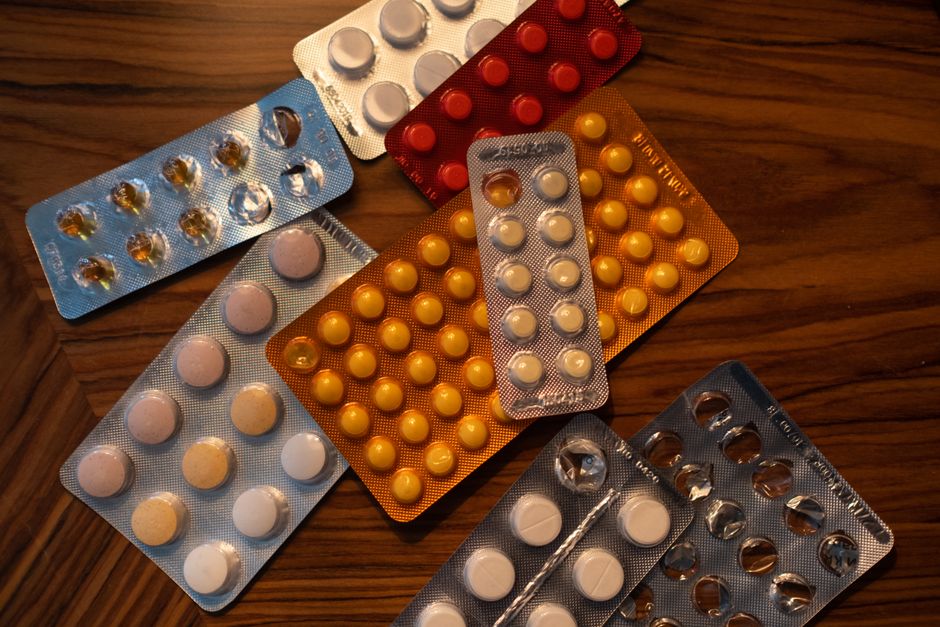
You are not alone in mixing supplements with medicines
You pick up a vitamin at the pharmacy. A friend recommends an herbal capsule. You already take a prescription medicine every day. It seems harmless to use them together — and most of the time, people do exactly that. In fact, about one in four adults takes a dietary supplement alongside at least one prescription medicine.
But some combinations do matter. A supplement can quietly change the way your prescribed medicine works in your body — sometimes making it less effective, sometimes making it stronger than it should be. The good news is that this is a risk you can manage, just by having the right conversations with your pharmacist or doctor.
Why supplements can change how your medicine works
Your body does not simply absorb a medicine whole. It processes it — breaking it down, moving it around, and eventually clearing it out. Special proteins called drug-metabolising enzymes (think of them as tiny chemical scissors inside your body) do a lot of that work. Some supplements can interfere with these enzymes.
When a supplement speeds those enzymes up, your medicine gets broken down too fast. Less of it reaches the parts of your body that need it, so it may not work as well. When a supplement slows the enzymes down, the medicine builds up to higher levels than intended. That can cause side effects or, in some cases, be genuinely dangerous. The same idea applies to other steps — how a medicine is absorbed from your gut, how it travels through your blood, and how your kidneys or liver clear it out.
It is also worth knowing that supplements are regulated differently from prescription medicines. In the United States, the FDA (the Food and Drug Administration) does not review or approve dietary supplements before they go on sale. That means interaction risks are rarely tested in a careful, formal way before a product reaches the shelf.
The clearest example: St. John’s Wort
St. John’s Wort is an herbal supplement many people use hoping to lift their mood. It is one of the most thoroughly studied supplements when it comes to drug interactions — and the findings are serious. It strongly activates those enzyme systems mentioned above, which means it can speed up the breakdown of many common prescription medicines.
The list of medicines affected is long and includes antidepressants, birth control pills, the immunosuppressant (immune-system-lowering medicine) cyclosporine, certain heart medicines including digoxin, some HIV medicines, and some cancer treatments. If your medicine is broken down too quickly, it may not work properly — and that can have real consequences, such as transplant rejection, an unplanned pregnancy, or a change in mood or heart rhythm.
St. John’s Wort is a good reminder that well-studied does not mean well-known to the person taking it. Many people using it alongside prescription medicines have no idea there is a concern.
Other combinations worth knowing about
Blood thinners are one of the highest-risk medicine groups when it comes to supplement interactions. Warfarin, for example, is a prescription anticoagulant (a medicine that reduces blood clotting). Taking high amounts of Vitamin E alongside it can increase that anti-clotting effect and raise the risk of bleeding. Omega-3 fatty acids — found in fish oil supplements — and other vitamins such as Vitamin A and CoQ10 may also affect clotting when taken with blood thinners or antiplatelet medicines (medicines that stop platelets from sticking together).
Cardiovascular medicines (medicines for the heart and blood vessels), medicines that lower blood sugar, and antiretroviral medicines (used to treat HIV) are also groups where interactions with supplements have been well recognised. Harmful effects tend to be most significant with these medicines, so extra care is worth taking if you use any of them.
That said, the evidence is not equal across all supplements. Some interactions are confirmed by studies in real people. Others are only predicted from laboratory experiments and have not yet been shown to cause harm outside a test tube. Where the evidence is uncertain, that uncertainty is real — and it does not mean a combination is definitely safe.
What “natural” really means — and what it does not
One of the most common misunderstandings is that a supplement is safe because it comes from a plant or is sold as natural. Plant-derived does not mean inactive. Many powerful medicines — including some heart medicines and cancer treatments — originally came from plants. A supplement can be completely natural and still have a strong effect on the enzymes that process your medicines.
The absence of a warning label is not the same as proof of safety. Because supplements do not go through the same pre-market testing as prescription drugs, an interaction may simply not have been discovered yet — not confirmed to be absent. This is not a reason to be alarmed about every supplement, but it is a reason to stay curious and ask questions.
The most important step you can take
Research suggests that up to 70% of people who take dietary supplements do not mention it to their doctor or pharmacist. That is understandable — supplements feel separate from medicines, more like food than drugs. But from your body’s point of view, they are all chemicals that interact with the same systems.
Telling your pharmacist or prescriber about everything you take — vitamins, minerals, herbal products, protein powders, anything — gives them the information they need to check for concerns before any harm occurs. This is especially important when you are starting a new prescription, stopping one, or if you notice anything unexpected happening in your body. It is also worth mentioning supplements if you are about to have surgery, since some can affect bleeding or how your body responds to anaesthetic.
Your community pharmacist is often the easiest first point of contact. You do not need an appointment. A quick conversation — “I take this supplement, is it okay with my prescription?” — can catch a problem before it starts.
When to get help
Some signs mean you should contact a clinician promptly, or go to an emergency room. Do not wait to see if things improve on their own if you notice:
- Unusual or unexpected bleeding — for example, bleeding gums, nosebleeds that won’t stop, blood in urine or stool, or bruising easily without injury.
- Signs your medicine may have stopped working — such as a return of symptoms your medicine was controlling well before.
- Symptoms that suggest a medicine level is too high — including a fast or irregular heartbeat, confusion, severe nausea or vomiting, or extreme drowsiness.
- An allergic reaction — hives, swelling of the face or throat, difficulty breathing. This is an emergency: call your local emergency number immediately.
- Any new or unexplained symptom that started after you began taking a supplement alongside your prescription medicine.
If you are ever unsure whether what you are feeling is serious, err on the side of checking. A pharmacist, nurse helpline, or doctor can help you decide what to do next.
A small habit that makes a big difference
Managing your health involves a lot of moving parts. Supplements feel easy — no prescription required, no doctor visit needed. But keeping your pharmacist and prescriber in the picture about everything you take is one of the most effective things you can do to stay safe. It does not require any specialist knowledge on your part. It just requires telling the full story. Your healthcare team can do the rest.
You are doing the right thing by asking questions. Understanding how things work — even in broad strokes — helps you take better care of yourself and the people you love.
Where this came from
- Patient Dietary Supplements Use: Do Results from Natural Language Processing of Clinical Notes Agree with Survey Data? (ncbi.nlm.nih.gov)
- Pharmacological Interactions Between Nutritional Supplements and Prescription Medications in Older Adults: A Comprehensive Review (ncbi.nlm.nih.gov)
- Complementary products: resources to support answering questions (sps.nhs.uk)
- Validation and Utility of Drug-Nutrient Interaction and Dietary Supplement Mechanistic Activity in the Natural Medicines Database (ncbi.nlm.nih.gov)
- July 15, 2017 ◆ Volume 96, Number 2 www.aafp.org/afp (aafp.org)
- Patient safety and the widespread use of herbs and supplements (ncbi.nlm.nih.gov)
Keep your medicines organized and easier to understand
Photograph a label to learn what a medicine is and how it is taken, and keep one current list of everything you take.